The Channel Came First
In 1902 a man paid a sea captain a thousand dollars to sail into Gulfport and prove the water was deep enough. The district now rising at the head of 25th Avenue takes its name from that channel, and from the hotel that stood there for half a century.
“Two hundred and fifty rooms, and a telephone in every one of them, in 1903.”
On January 24, 1902, Captain Joseph T. Jones paid an Italian sea captain named Philippo Avegno a thousand dollars to sail a ship into Gulfport.
It was not a delivery. It was a demonstration. Jones had spent his own money dredging a deep water channel into a harbor most people did not believe could take one, and the fastest way to end the argument was to have somebody sail through it while people watched.
That channel is why there is a port. The port is why there is a city.
The man who built the town
Jones was from Pennsylvania and arrived on the coast in his fifties, having already made a fortune in oil. He struck on his thirteenth well in 1867 and became, for a period, the largest crude producer in the United States.
He came south buying pinelands and then built the apparatus of a city around them. The First National Bank. Union Station. The Gulfport Real Estate Improvement Company. The Gulf and Ship Island Railroad, which he finished. A bronze statue went up in 1942 calling him the city's greatest benefactor.
In June 1903, at the head of 25th Avenue facing the Mississippi Sound, he opened the Great Southern Hotel.
Six hundred feet of frontage and a telephone in every room
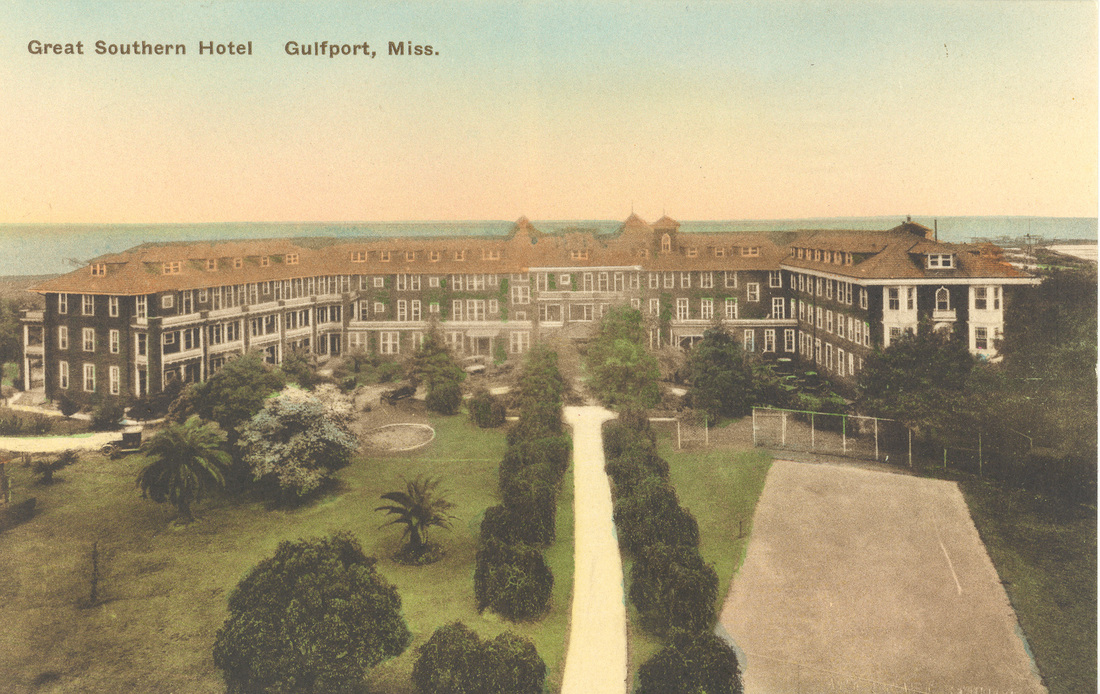
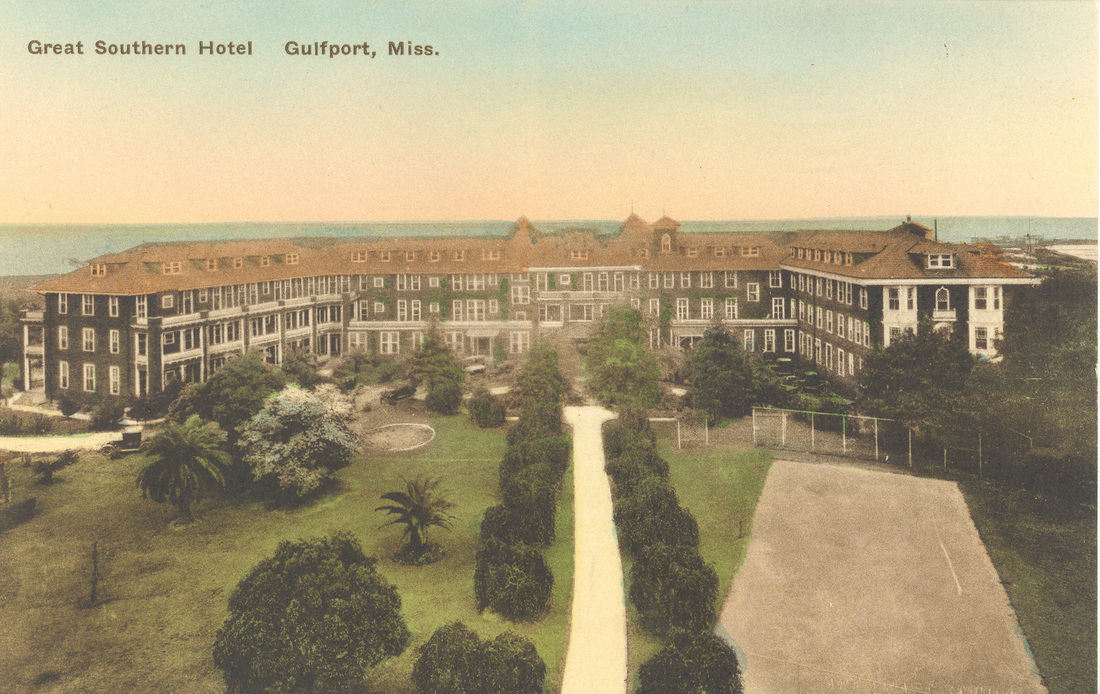
The Great Southern was a three storey wooden building, painted dark olive green with gray shutters, white trim and a red clay tile roof, set in gardens of palms and oleander. It had more than six hundred feet of frontage on the water.
Two hundred and fifty rooms, and a telephone in every one of them, in 1903. Hot and cold running water. Electric chandeliers. Its own artesian well, its own sewage system and its own powerhouse, because none of that was arriving from anywhere else yet.
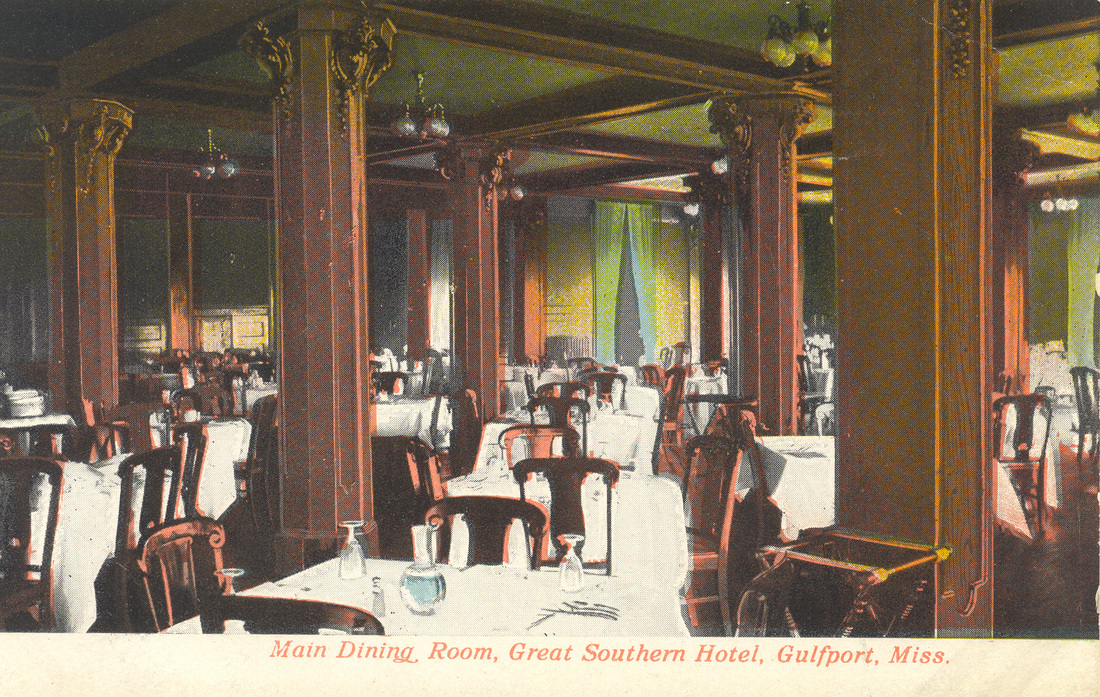
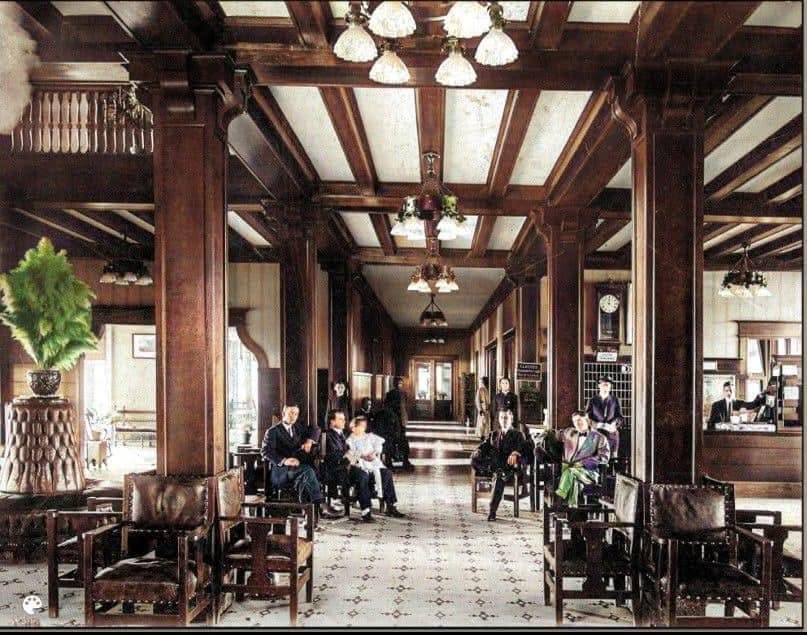
The lobby was antique oak and billed as the meeting place of the entire middle south. There was a grand dining room in Flemish oak, a café, a billiards room, a palm room, and a court for box ball. The marketing called it the aristocrat of southern taverns.
A pier ran out from the lawn with a tram on it, carrying guests to the Gulfport Yacht Club at the end. In 1908 Jones engaged Donald Ross, the most sought after golf architect of the era, to lay out a nine hole course overlooking the Sound.
And then it was gone
It closed briefly during the Depression, was rescued by local owners, and then slowly lost out to the way people started travelling. It came down in 1951 to make room for US Highway 90.
Jones Park occupies the original site today. The land was given to the city in 1935 by Grace Jones Stewart, for a public park and a small craft harbor.
“For nearly 50 years, the Great Southern Hotel was our living room. Its loss left a void in our skyline, and a hole in our downtown's heart.”Carole Lynn Meadows, Chairwoman, Gulfport Redevelopment Commission
The name
On March 20 this year, at a ceremonial groundbreaking on the site, the district was given its name for the first time.
Channel, for the manmade channel Jones dredged. South, for the hotel that stood there for half a century.
What is being built
Channel South is a $105 million mixed use district on roughly 4.34 acres at 25th Avenue and West Beach Boulevard. Not on the hotel's footprint, which is parkland and highway now, but on the same waterfront, at the head of the same avenue, across the boulevard from where it stood. The land was assembled beginning in 2020.
The first phase is 136 residences, roughly 17,637 square feet of retail and restaurant space at street level, a 294 space parking structure, and Hotel Holden, a 114 room property of approximately 76,033 square feet in Marriott's Tribute Portfolio. AnderCorp is co-developer and general contractor, with Bellamare Development as co-developer and hotel developer.
Construction began in December 2025. The parking structure delivers first, with the residential and hospitality components through 2027.
Why those pieces, in that combination
Sunny Sethi, CEO of Bellamare Development and a co-developer on the project, described the logic at the groundbreaking. Residents living downtown are what activate a downtown. A hotel brings transient traffic that retail cannot generate on its own. Street level retail, restaurants and coffee shops give both groups somewhere to go.
None of the three works especially well alone. Together they produce something a single use building cannot.
State Senator Scott DeLano put the hotel's role in commercial terms at the groundbreaking, saying the nightly guest turnover is exactly what downtown restaurants need. He also noted the developers went through five or six iterations of a project before landing on the one that fit.
“This, essentially, will become the living room of the Gulf Coast.”Sunny Sethi, CEO, Bellamare Development, speaking to WLOX
A Tribute flag
Hotel Holden sits in Marriott's Tribute Portfolio, the collection built for independent, character driven hotels that reflect the identity of where they are, while running on Marriott's reservation system and Bonvoy loyalty network.
The hotel will include a ballroom and a rooftop bar. It will be managed by McKibbon Hospitality, a long standing Marriott partner with decades of hotel operations across the Southeast.
The parking is publicly owned
The garage will be owned by the Gulfport Redevelopment Commission and leased back to an operator, who will maintain it and lease spaces to residents, hotel guests and surrounding businesses.
Structured parking rarely pencils against a single private use. Under public ownership with a private operator it serves the district instead of one address, which is how a downtown ends up with parking that works for more than the building that paid for it.
Gulf Coast Restoration Funds are supporting the utility construction and the garage. At the groundbreaking, Sethi thanked the Mississippi Legislature, the Gulf Coast Restoration Fund, the Gulfport Redevelopment Commission and the Mississippi Development Authority for making an investment of that scale possible.
Designed in state
Hotel architecture and design are led by Dale Partners Architects in Biloxi. The multifamily and parking structures are designed by WBA Architecture in Jackson. Both firms are headquartered in Mississippi.
The project advanced through post pandemic cost escalation, inflation and rising interest rates. A competitiveness study commissioned by the Gulf Coast Business Council, conducted by TIP Strategies, had already identified quality of place and downtown living as what the coast was short of.
What it employs
At peak construction the project is expected to support between 125 and 175 construction jobs. On completion, roughly 75 permanent hospitality jobs at the hotel, plus employment across retail and property operations.
It is planned as the first phase of a larger multi phase downtown district.
What the city is seeing now
Six months after the groundbreaking, Gulfport's mayor described a downtown already responding, with calls coming in from people looking for office space and for buildings to convert. He points at the blue economy growing at the state port, the high technology jobs arriving with it, and a workforce that wants somewhere walkable to live.
At the groundbreaking he had already mentioned that Hattiesburg restaurateur Robert St. John was opening The Downtowner nearby, and that investors were calling about available downtown space.
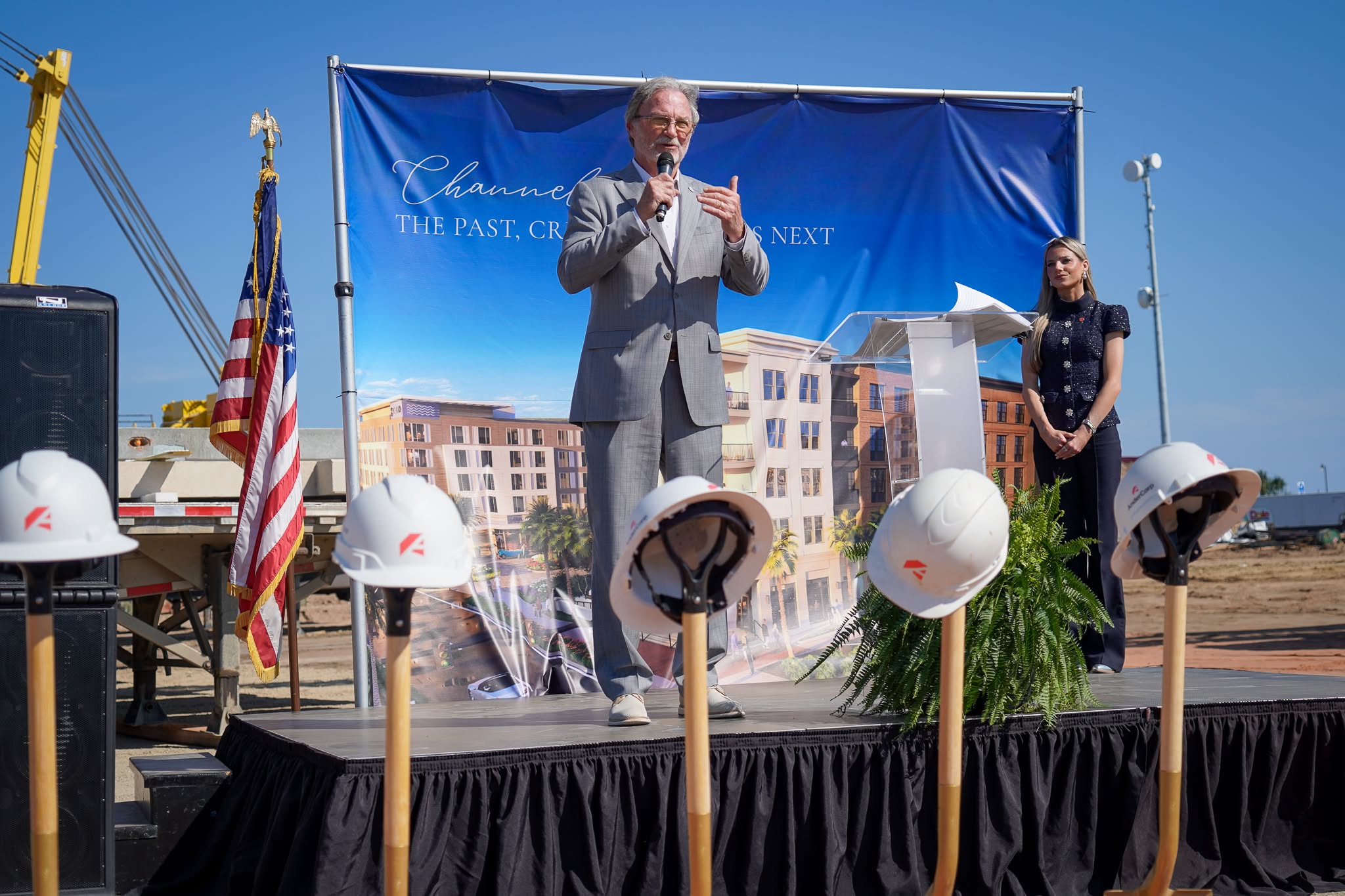
“This is the front door to the state of Mississippi.”Mayor Hugh Keating, speaking to WXXV News 25
Hotel Holden's rooftop will look out over Jones Park and the Harbor. Which means it will look over the ground where the Great Southern stood, across land given to the city in 1935, toward a channel a man once paid a stranger a thousand dollars to prove was deep enough.
The Redevelopment Commission's chairwoman called the Great Southern the city's living room for fifty years.
The developer, standing on the same ground seventy five years after it came down, used the same words about what is replacing it.